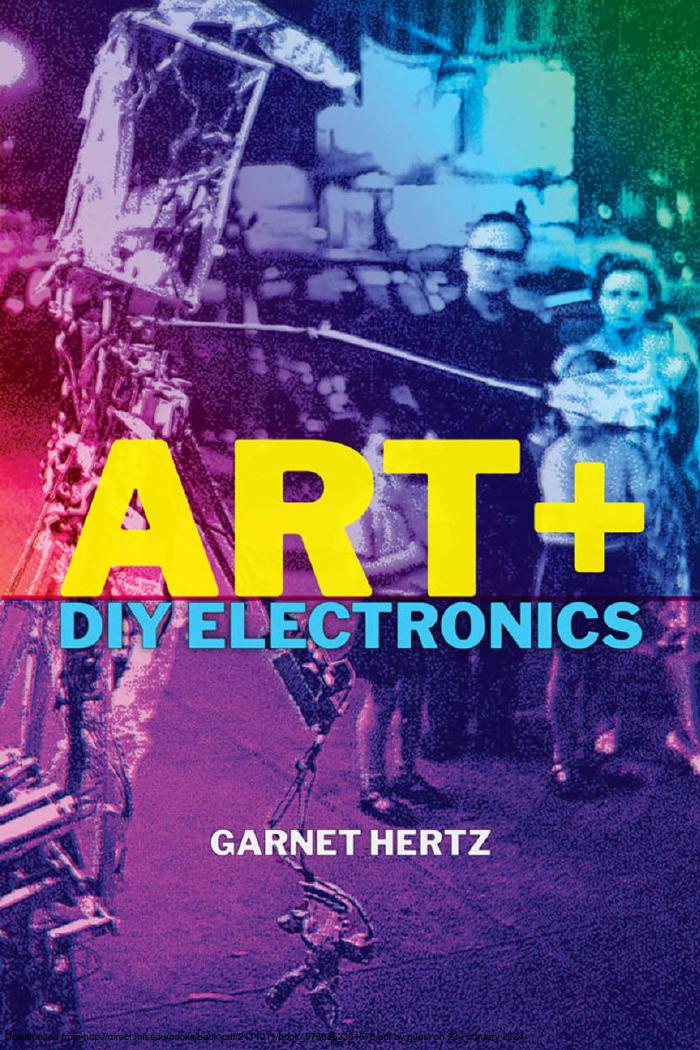
Art + DIY Electronics
Penulis
Penerbit
The MIT Press
Bahasa
Indonesia
Dilihat
1,191 kali
Ditambahkan
24 Feb 2024
Kategori
Sinopsis
My interest in do-it-yourself culture is influenced by my childhood on a farm in Clemenceau, Saskatchewan (figure 0.1). Rural technologies, often fixed or built out of necessity, sparked my love for innovations: fixing a throttle link-age with a coat hanger, building a go-kart out of a tricycle, and trying to weld together hybridized farm equipment to save time and make money. People have to “make do” in rural environments without professional help or equipment. As a result, the built objects are often quirky, kludged, and nonstandard. However, farms in Saskatchewan are far from utopian. Immigrants to Canada around the turn of the twentieth century were promised wide-open, bucolic farmland. Instead, they found a rugged environment with harsh winters, a fog of mosquitoes during the short summers, and great distances between settlements. Although vast, the territory was not empty. The settlers who came to claim the land often did so through brutal force at the expense of indigenous communities that had lived there for thousands of years. Amplified by the weather, natural terrain, and decades of systematic neglect, the infrastructural gaps in Saskatchewan are still considerable—especially in remote communities and among the First Nations. Surviving there requires resourceful and creative use of available materials, especially for those with less money and lower sociopolitical status. In other words, what we call “DIY” (do-it-yourself) is regularly a necessity to navigating and bridging gaps in infrastructure.
Ulasan Pembaca
Masuk untuk memberikan ulasan dan rating.
Belum ada ulasan. Jadilah yang pertama!