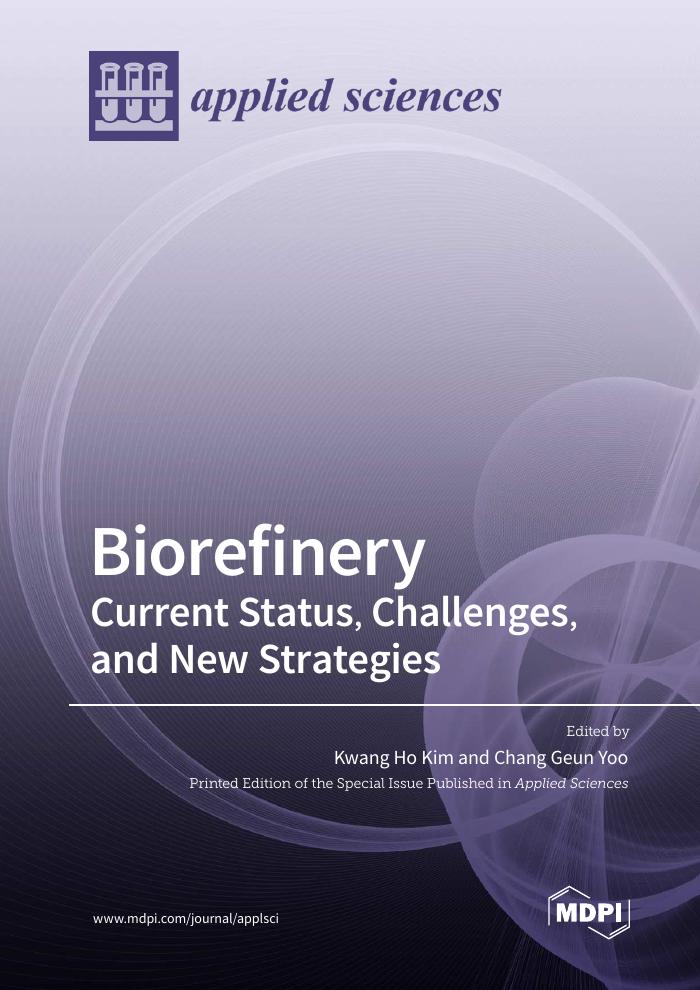
Biorefinery: Current Status, Challenges, and New Strategies
Penulis
Penerbit
MDPI
ISBN
978-3-0365-1509-
Bahasa
Indonesia
Dilihat
2,302 kali
Ditambahkan
04 Mar 2024
Sinopsis
The overdependence on fossil fuels has raised concerns about global warming and the energy crisis, which has warranted significant research to find alternatives. Lignocellulosic biomass has attracted significant attention because it is renewable, abundant, and carbon-neutral [1]. The past decade has seen increasing research efforts to develop biomass-to-bioproducts processes. Despite the huge potential proven by recent biorefineries, the current bioeconomy still faces various technical challenges. In this respect, modern lignocellulosic biorefineries aim to develop more sustainable biomass conversion processes, tackling such challenges.
Fractionation of biomass components, typically the first stage in biomass conversion processes, remains an essential step to facilitate the separation of lignin and polysaccharides. In this Special Issue, Ahmed et al. [2] studied the effect of gamma-valerolactone (GVL)- assisted biomass fractionation on lignin extraction and cellulose digestion. GVL was recently viewed as a sustainable alternative in biomass defragmentation [3]. In this article, the authors reported that 80% aqueous GVL could effectively remove lignin and enhance enzymatic digestibility. Lee et al. [4] used a two-step pretreatment approach that includes an acid-catalyzed steam explosion followed by alkali-catalyzed organosoly treatment to separate cellulose-rich fraction and lignin from an empty fruit bunch.
Ulasan Pembaca
Masuk untuk memberikan ulasan dan rating.
Belum ada ulasan. Jadilah yang pertama!
Buku Terkait