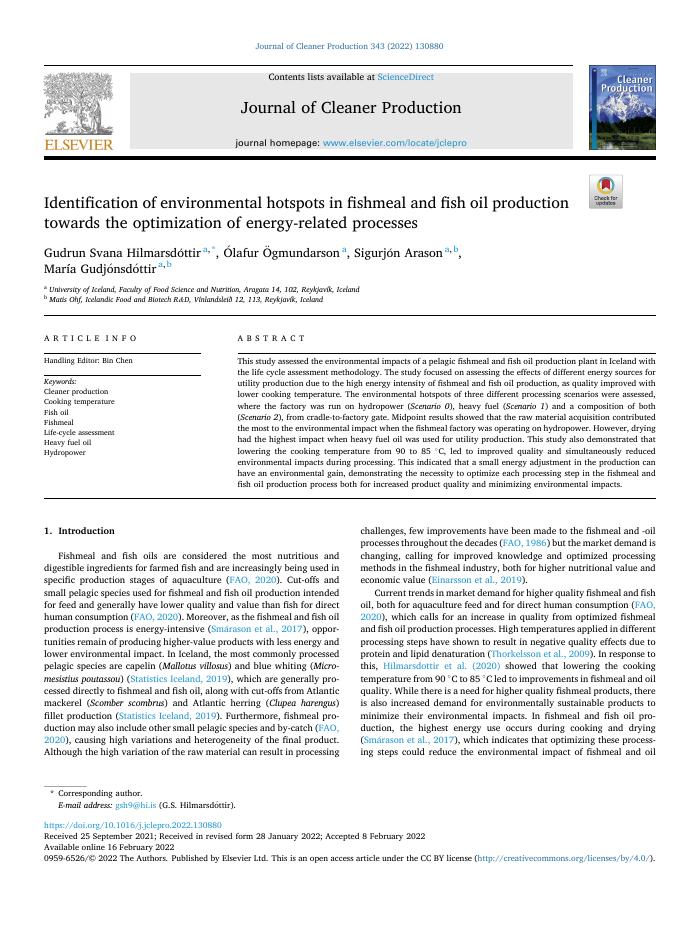
Identification of environmental hotspots in fishmeal and fish oil production towards the optimization of energy-related processes
Penulis
Penerbit
Elsevier
Bahasa
Indonesia
Dilihat
1,264 kali
Ditambahkan
04 Apr 2022
Kategori
Sinopsis
This study assessed the environmental impacts of a pelagic fishmeal and fish oil production plant in Iceland with the life cycle assessment methodology. The study focused on assessing the effects of different energy sources for utility production due to the high energy intensity of fishmeal and fish oil production, as quality improved with lower cooking temperature. The environmental hotspots of three different processing scenarios were assessed, where the factory was run on hydropower (Scenario 0), heavy fuel (Scenario 1) and a composition of both (Scenario 2), from cradle-to-factory gate. Midpoint results showed that the raw material acquisition contributed the most to the environmental impact when the fishmeal factory was operating on hydropower. However, drying had the highest impact when heavy fuel oil was used for utility production. This study also demonstrated that lowering the cooking temperature from 90 to 85 ◦C, led to improved quality and simultaneously reduced environmental impacts during processing. This indicated that a small energy adjustment in the production can have an environmental gain, demonstrating the necessity to optimize each processing step in the fishmeal and fish oil production process both for increased product quality and minimizing environmental impacts.
Ulasan Pembaca
Masuk untuk memberikan ulasan dan rating.
Belum ada ulasan. Jadilah yang pertama!
Buku Terkait